 The Daily Pulse
Science & Environment• Updated
Urban building designs trap heat by blocking crucial near-surface winds
Reported by Rohit Yadav (Staff Writer) · The Hindu - Science ·
Confirmed by a second source: The Hindu - Energy and Environment
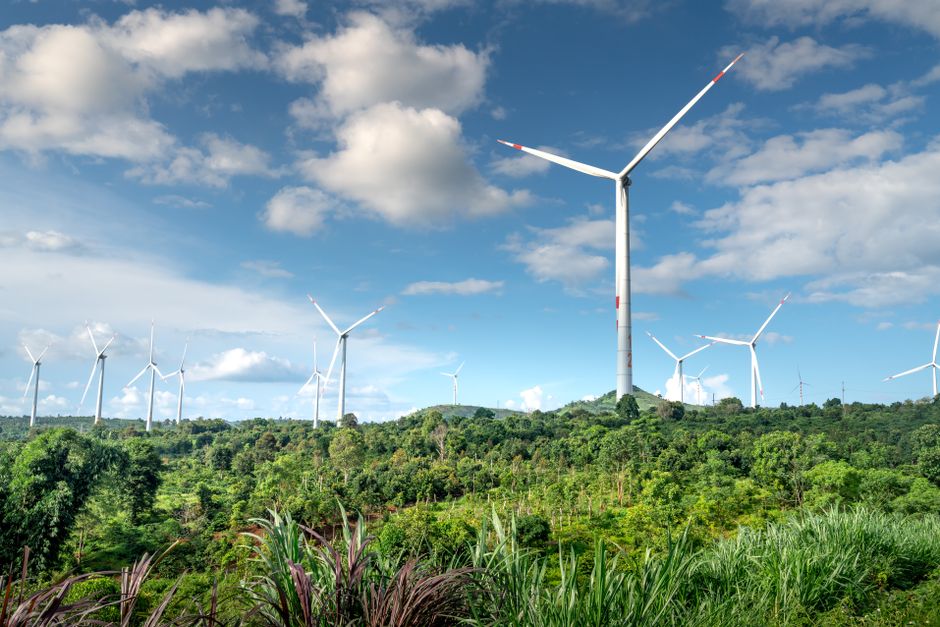
 Representative image · Pexels
UPDATE - follow-up to Letting the wind flow freely is the secret to cooling our cities: Urban planning across Indian metropolitan areas frequently overlooks wind flow integration, as high-rise buildings and dense infrastructure restrict vital near-surface breezes and intensify pedestrian heat stress.
Urban Wind Factors
Surface-level wind speeds have dropped globally since the 1980s in a trend known as terrestrial stilling. Amruthraj M.N., a consultant with the Sustainable Energy Lab at the Indian Institute for Human Settlements in Bengaluru, points out that pedestrian levels roughly 10 meters from the ground experience these reduced speeds. Aaron Serre, a meteorologist from the University of Alabama in Huntsville, notes that dense urban infrastructure increases surface friction and creates turbulence. Furthermore, replacing vegetation with asphalt and concrete cuts down evapotranspiration and worsens the urban heat island effect.
Architectural Obstacles
Many Indian cities feature high compound walls, podiums, and tall buildings built without proper spacing. These rougher surfaces slow down wind and alter its direction. When wind hits high-rise structures, it can create the downdraught effect by pushing air downwards into strong gusts, or the Venturi effect by funneling air through narrow spaces in places like London and Jaipur. Prasad Vaidya, a senior adviser at IIHS, explains that unplanned higher building forms directly contribute to lower wind speeds and extra heat stress.
Planning Challenges
Experts advocate for better city ventilation maps and computer-based modelling techniques like computational fluid dynamics to simulate wind behaviour. However, Yugank Goyal, associate professor at IIM Ahmedabad, stresses the need for a homogenized wind record because current anemometer placements remain inconsistent. Fluid dynamics simulations also face hurdles due to high computer costs and complex fluid mechanics, while foreign examples in cities like Stuttgart, Seoul, and Hong Kong demonstrate how ventilation improvements can be implemented.
Context
Urban microclimates are heavily influenced by the physical layout of buildings and open spaces, which directly shape how heat and air pollution disperse at street level. Incorporating wind analysis into early urban design helps mitigate the severe heat stress experienced by city residents during hot weather.
What changed since yesterday
- Tall buildings and slow winds make urban heat worse
- Urban building designs trap heat by blocking crucial near-surface winds
- Urban planning must factor in wind flow to reduce city heat stress
- Urban planning must factor in wind flows to curb heat stress in Indian cities
- Urban infrastructure and high-rise buildings slow near-surface winds, worsening city heat
- Urban planning must factor in wind flow to combat city heat
- Urban planning must factor in wind flow to combat city heat, experts warn
Latest
Urban building designs trap heat by blocking crucial near-surface winds
ExplainerWhy this matters
What Happened
Urban development across growing cities has introduced dense high-rise buildings, solid walls, and paved surfaces that obstruct natural wind paths and trap heat near the ground.
Why It Matters
Restricted wind movement limits natural evaporation, worsens the urban heat island effect, traps air pollution, and increases physical heat stress for millions of pedestrians walking at street level.
What Happens Next
Urban planners face mounting pressure to incorporate wind flow analysis, satellite imagery, and ventilation maps into city master plans, though high computational costs currently limit widespread adoption.
More in Science & Environment
 Representative image · Pexels
Science & Environment• UpdatedExplainerVerified — Confirmed by a second source: The Hindu - ScienceImportant
Urban wind speeds drop across cities as taller buildings block natural airflow and worsen heat
Reported by Neha Sharma (Staff Writer) · The Hindu - Energy and Environment ·
Science & Environment• UpdatedExplainerVerified — Confirmed by a second source: The Hindu - Energy and EnvironmentImportant
Urban planning gaps and high-rises worsen near-ground wind drop in Indian cities.
Reported by Deepak Mishra (Copy Editor) · The Hindu - Science ·
Science & Environment• UpdatedExplainerVerified — Confirmed by a second source: The Hindu - ScienceImportant
Urban building designs slow ground-level winds and worsen city heat stress.
Reported by Tanvi Pillai (Section Editor) · The Hindu - Energy and Environment ·